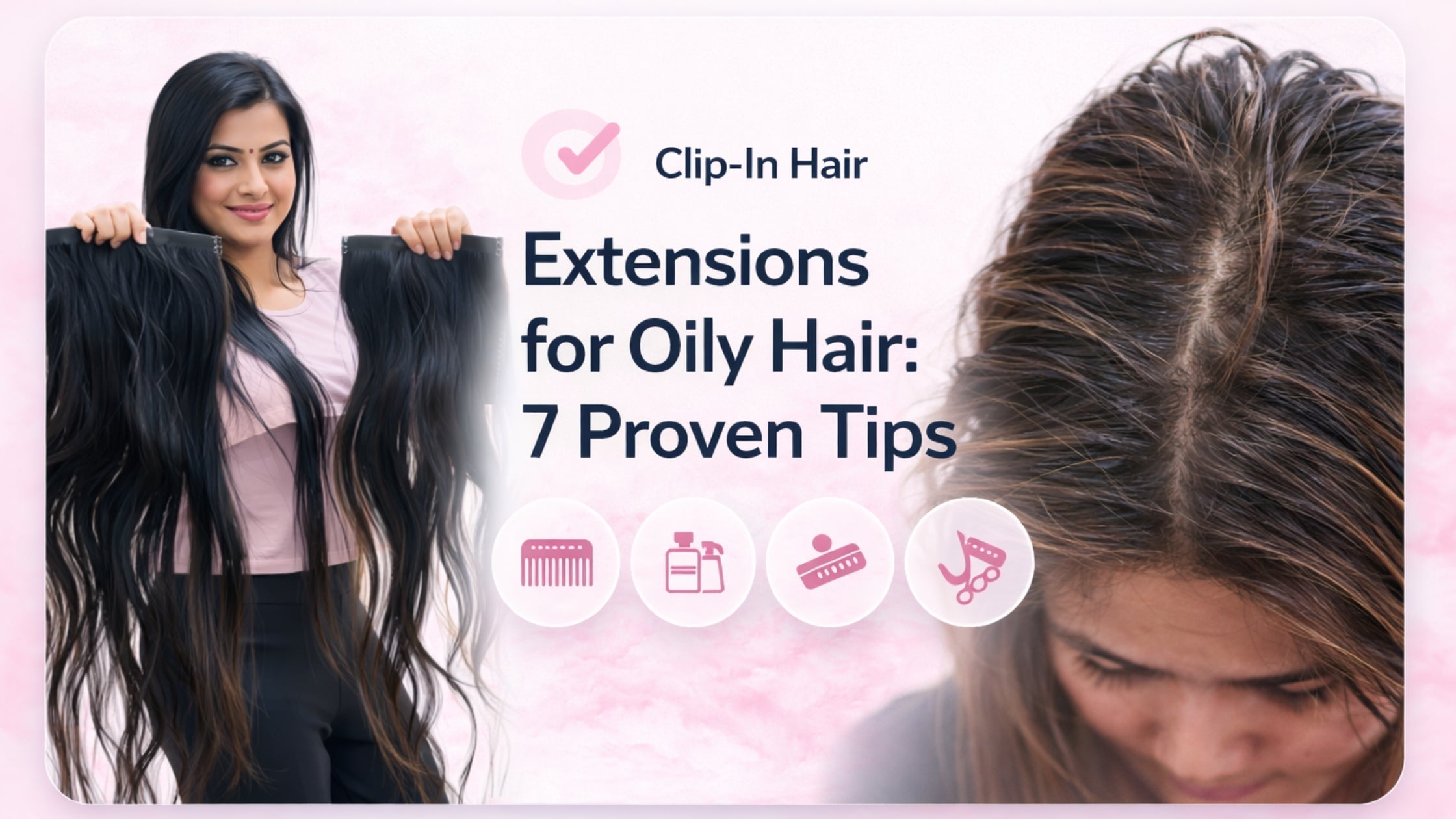
Clip-In Hair Extensions for Oily Hair: 7 Proven Tips to Keep Them in Place All Day
You clip in your extensions at 9am. By noon they have slid down, the clips feel loose, and the whole style looks like it is slowly giving up. If this sounds familiar, you are not alone and the problem is not your extensions.
Oily hair is one of the most common hair types across India. And it is also the hair type most women assume makes clip-in extensions impossible to wear. That assumption is wrong. Oily hair does not prevent extensions from working. Incorrect preparation does.
In Indian climate conditions, especially during summer and monsoon months, heat and humidity accelerate scalp oil production, which makes the preparation steps in this guide even more important.
This guide covers 7 proven tips specifically for wearing clip-in hair extensions on oily hair. Each tip is grounded in real extension care guidance from verified sources. Follow these steps and the difference from your first try is noticeable.
Why Oily Hair Makes Clip-In Extensions Slip

Understanding why this happens makes every tip below easier to apply.
Clip-in extensions grip by friction. The small metal clips press against a section of hair and hold by creating resistance between the clip teeth and the hair shaft. When the hair shaft carries excess sebum, that surface becomes smooth and slick. Friction drops and the clip slides.
The problem is worse on freshly washed hair than most women expect. Hair washed just before wearing extensions is at its softest and smoothest. Natural oil production begins within hours of washing, but in those first few hours, the hair shaft has no texture for clips to grip. This is why extensions applied on freshly washed hair often slip more than hair in its normal oily state.
According to Cliphair's extension care guide, natural oils are one of the primary causes of clip-in slipping, and the fix is not washing more frequently but preparing the hair correctly before application.
7 Proven Tips to Keep Clip-In Extensions in Place on Oily Hair
Tip 1: Wash Your Hair the Evening Before, Not the Morning Of
This single change fixes the majority of slipping problems without any product adjustment.
Hair washed 12 to 18 hours before application has lost its fresh-wash smoothness and developed just enough natural texture for clips to grip. Hair washed the same morning is too soft and too silky. The sebum that creates grip has not yet had time to develop.
If your event is in the morning and evening washing is not possible, apply dry shampoo immediately after washing and leave it overnight. This pre-treats the hair shaft and creates the texture needed for clip grip.
Tip 2: Apply Dry Shampoo at the Roots Before Clipping
Dry shampoo absorbs excess sebum at the roots and adds light texture to the hair shaft that gives clips something to hold onto. Apply it specifically at the sections where clips will sit, not across the entire head. Allow 60 seconds to absorb before clipping.
If dry shampoo is new to you, choose a powder-based formula over a spray. Powder formulas leave less white residue on dark Indian hair and are easier to control.
Important: Apply only to your natural hair sections, never to the extension wefts. Product on the wefts builds residue over time and shortens their lifespan.
Tip 3: Tease the Roots Lightly at Each Clip Point
Light backcombing at each clip section creates micro-texture on the hair shaft so the clip grips the fibres rather than sliding along a smooth surface. Use a fine-tooth comb and tease just the top layer gently. Two to three light strokes is enough.
This works especially well for fine, straight, oily hair, which is the most slip-prone combination. According to BM Magazine's extension guide, teasing at clip points is one of the most consistently recommended fixes from professional stylists.
Tip 4: Use a Texturising Spray Instead of Any Oil-Based Product
On extension wear days, avoid coconut oil, argan oil, or any serum near the scalp or root sections. Oil-based products at the roots directly reduce clip grip.
Replace them with a lightweight texturising spray applied from mid-length only. Silicone-heavy conditioners cause the same problem as oil, so on wash days keep conditioner from mid-length to ends and leave the roots completely product-free.
Tip 5: Section Hair Cleanly Before Each Clip
A messy or rushed section means the clip grabs an uneven thickness of hair, sits at an angle, and slips within hours. Use a rat-tail comb rather than fingers to create a clean, straight horizontal parting before each clip placement.
Take the extra 30 seconds per section. On oily hair this step matters more than on dry or coarse hair because there is less natural grip helping the clip hold.
Tip 6: Finish With a Light-Hold Hairspray Over the Clip Points
After all extensions are placed, a light mist of hairspray directly over each clip point locks the grip for several hours. Use a light-hold spray only and hold the can 30 centimetres away. One pass is enough.
This step is particularly important in Indian climate conditions. Heat and humidity accelerate sebum production throughout the day, and the hairspray layer over clip points holds grip even as the scalp becomes oilier through the afternoon.
Tip 7: Carry a Small Dry Shampoo for Mid-Day Touch-Ups
Even with perfect morning preparation, oily scalps continue producing sebum. A travel-size dry shampoo in your bag lets you refresh grip mid-day without removing and reapplying extensions.
Lift each clipped section slightly, spray the roots, allow 30 seconds to absorb, and press the clip back down. Under two minutes per section, and it extends a morning application by three to four hours.
What to Avoid on Days You Wear Clip-In Extensions

These are the most common mistakes that cause slipping, and all of them are straightforward to stop.
-
Applying hair oil or serum near the scalp. Coconut oil, argan oil, and silicone serums at the roots reduce clip friction directly. Apply any oils only from mid-length down if needed.
-
Washing hair the same morning as application. Freshly washed hair is too smooth for clips to grip. Wash the evening before instead.
-
Using a heavy conditioner at the roots on wash day. The conditioner at the root section coats the hair shaft the same way oil does. Keep conditioner from mid-length to ends only.
-
Over-brushing before application. Excessive brushing distributes natural scalp oil along the full length of the hair shaft and increases the slick surface area that clips have to grip against.
-
Applying multiple heavy styling products before clipping. Product buildup weighs down the hair and reduces friction at the clip base. Keep the product routine minimal on extension wear days until after the extensions are placed.
These recommendations align with extension care guidance from Cliphair and Perfect Locks, both of which cite product buildup and over-oiling as leading causes of extension deterioration and slipping.
Does Oily Hair Damage Clip-In Extensions Over Time?
This is one of the most common questions from women with oily scalps who are new to extensions, and the answer is reassuring.
Natural scalp oil does not damage Remy human hair extensions. Extensions do not connect to the scalp, so they do not absorb sebum the way your natural hair does. The oil issue only affects grip during wear, not the condition of the extension itself.
The only real risk comes from applying oil-based styling products directly to the extension weft over time. That builds residue on the fibre and weighs it down. The fix is simple: wash extensions every 10 to 15 uses with a sulfate-free clarifying shampoo. According to both Cliphair and Perfect Locks extension care guides, this wash frequency keeps extensions clean and in good condition even with regular oily-scalp wear.
With correct care, 100% Remy human hair extensions last six to twelve months regardless of scalp type. Oily hair is not a reason to avoid extensions. It is a reason to prepare correctly before wearing them.
Frequently Asked Questions
Can I wear clip-in extensions if I have an oily scalp?
Yes. Oily scalp does not prevent clip-in extensions from working. The clips grip the hair shaft, not the scalp. The key is preparing your hair correctly before application: wash the evening before, use dry shampoo at clip points, and avoid oil-based products near the roots on wear days.
Should I wash my hair before wearing clip-in extensions?
Wash your hair the evening before, not the morning of. Freshly washed hair is too smooth and soft for clips to grip properly. Hair washed 12 to 18 hours before application has developed just enough natural texture for clips to hold firmly throughout the day.
Why do my clip-in extensions keep sliding down?
Slipping is almost always caused by one of three things: hair washed the same morning, oil-based products applied near the roots, or rushed sectioning before clipping. Fix the timing of your wash, remove oily products from your pre-extension routine, and use a rat-tail comb to create clean sections before each clip placement.
Is dry shampoo safe to use with clip-in hair extensions?
Yes, dry shampoo is safe and recommended for oily hair when wearing clip-in extensions. Apply it to your natural hair at the root sections only, not to the extension wefts. Allow 60 seconds for it to absorb before clipping. It absorbs excess sebum and adds the grip texture that clips need to hold firmly.
How often should I wash clip-in extensions if I have oily hair?
Wash clip-in extensions every 10 to 15 uses, not after every wear. Extensions do not connect to the scalp and do not absorb sebum the way natural hair does. Over-washing shortens extension lifespan. Use a sulfate-free clarifying shampoo and wash gently by soaking the weft rather than scrubbing it.
Oily Hair Is Not the Problem. Preparation Is.
Every tip in this guide addresses one underlying issue: clip-in extensions need friction to stay in place, and oily hair reduces that friction. Fix the preparation and the extensions work exactly as they should, regardless of scalp type.
Once you have the grip solved, the next step most women with oily hair ask about is shade matching. If you are still finding the right colour, the complete Indian hair shade guide covers undertones, colour categories, and the exact shades that work for Indian hair types.
If you are still deciding which type of clip-in extension suits your hair best, the complete clip-in hair extensions buying guide for Indian women covers every extension type, weight, and price range in full detail.
Oily hair with perfectly held extensions is not just possible. It is the result of five minutes of correct preparation, and after the first time you get it right, it becomes second nature.