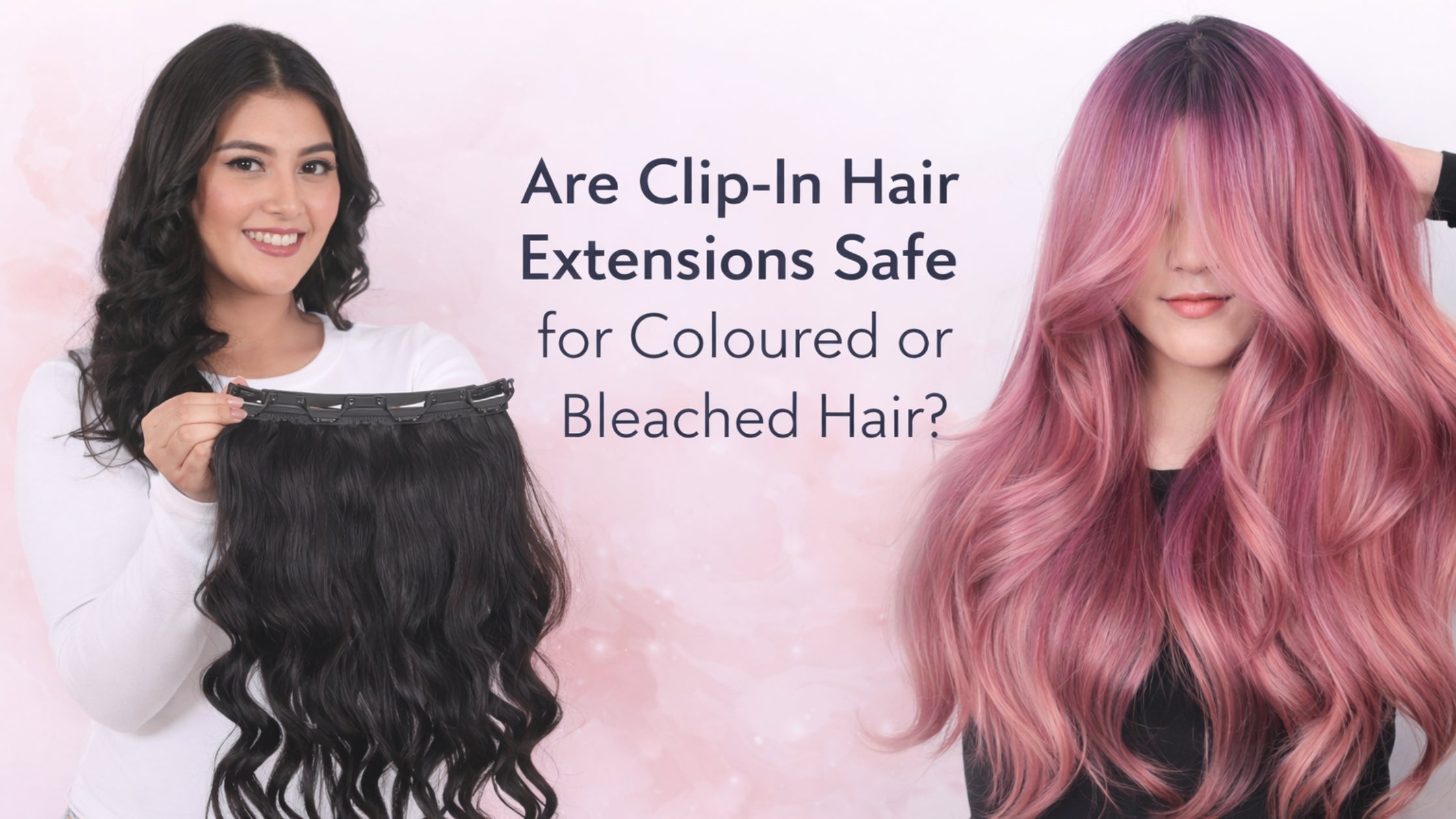
Are Clip-In Hair Extensions Safe for Coloured or Bleached Hair?
If your hair has been coloured, highlighted, or bleached, you probably have two questions before buying clip-in extensions. Will the clips break my already fragile hair? And will the extension shade actually match my processed colour?
Both questions are valid. Colour-treated and bleached hair behaves differently from natural hair. The cuticle is more porous, the shaft is more vulnerable to tension, and the base colour has shifted from its natural state.
The short answer is yes, clip-in hair extensions are safe for coloured and bleached hair. But there are two specific things that change compared to wearing them on natural hair: how you match the shade, and how carefully you place and remove the clips. This guide covers both in full detail.
Why Coloured and Bleached Hair Needs a Slightly Different Approach

Colour-treated hair undergoes a chemical process that opens the hair cuticle to deposit or remove pigment. Bleaching goes further by stripping the natural melanin from the shaft entirely. Both processes leave the hair more porous and more fragile than unprocessed hair.
This does not make extensions unsafe. It means two things shift: the hair breaks more easily under sustained tension, and the base colour no longer matches a standard natural shade chart.
Clip-in extensions attach using mechanical pressure clips. There is no chemical involved, no heat application, and no bonding agent. When applied correctly, they exert minimal and temporary tension on the hair shaft.
According to AiryHair's extension safety guide, clip-in extensions are the lowest-risk extension method for damaged or chemically treated hair for exactly this reason. The entire process is reversible, repeatable, and does not alter the hair structure in any way.
Clip-In Extensions vs Other Types on Colour-Treated Hair
If you have colour-treated or bleached hair and you are comparing extension methods, the differences matter significantly.
-
Tape-in extensions use a heat-activated adhesive that bonds to the hair. Removing them requires a solvent, which adds another chemical process to already-processed hair. On bleached hair, the adhesive can cause breakage at removal.
-
Keratin bond and fusion extensions apply direct heat to the hair shaft during installation. Heat on bleached or colour-damaged hair raises the risk of further cuticle damage.
-
Clip-in extensions use only mechanical pressure. No heat, no adhesive, no chemicals at any stage. They go in and come out with no residual effect on the hair.
According to Sitting Pretty Halo Hair's guide on extensions for damaged hair, clip-in and halo-style extensions are the safest options for women whose hair is in a vulnerable state from bleaching or heavy colour treatment, because they place no sustained load on the hair shaft.
Shade Matching Clip-In Extensions to Coloured or Bleached Hair
This is the most practically challenging part for women with colour-treated hair, and it is where most mismatches happen.
Coloured hair changes your base tone entirely. A woman whose natural hair is dark brown but has dyed it medium brown needs to match her extension to her current colour, not her natural colour. Buying based on memory of your natural shade almost always results in a mismatch.
For balayage and highlighted hair: match to your base root colour, not your highlights. Extensions clip at the root level, so root colour determines the blend. If your highlights are prominent, choose a shade slightly lighter than your base. This approach is covered in full detail in the Indian hair shade guide.
For burgundy or brown dye jobs: partial highlights, balayage, and single-process brown or burgundy dye are the most common colour treatments in urban India. For these women, match the extension to your current dyed shade in natural daylight rather than your original natural colour. Most brown and burgundy-treated Indian hair falls in the #2 dark brown or #4 medium brown range depending on how long ago the colour was applied and how much it has faded.
For bleached or platinum hair: very light shades are less common in Indian Remy extension ranges because natural Indian hair does not fall in that colour category. If your bleached hair is several shades lighter than your natural base, a professional toner applied to the extension after purchase is the most reliable way to achieve a match.
According to Luxy Hair's extension colouring guide, Remy human hair extensions can be toned darker after purchase but should never be bleached again, as they have already been processed once during manufacturing. Re-bleaching permanently weakens the cuticle.
Can You Dye or Tone Clip-In Extensions to Match Your Colour?
Yes, 100% Remy human hair extensions can be dyed darker or toned to match your colour-treated hair. Synthetic extensions cannot be dyed at all.
Going darker: straightforward and low risk. Use semi-permanent or demi-permanent dye only. Permanent dye contains harsher chemicals that dry out the extension fibre faster.
Going lighter or bleaching: not recommended. According to Cliphair's extension bleaching guide, human hair extensions have already been processed once during manufacturing. Re-bleaching causes permanent cuticle damage, leading to frizz, dryness, and a significantly shortened lifespan.
Toning: safe and often the best option for colour-treated women who need a subtle adjustment. Use a professional toner rather than a direct purple shampoo application, which can cause uneven staining on extension fibres.
According to Foxy Locks' extension dyeing guide, colouring should only adjust tones, not create drastic colour changes. Always do a strand test on one weft before treating the full set. Apply dye from mid-length to ends only and keep the product away from the clip base and weft root.
How to Wear Clip-In Extensions Safely on Colour-Treated Hair

These five steps address the specific vulnerabilities of chemically processed hair.
1. Place Clips Away From Your Most Fragile Sections
Bleached hair breaks most readily at the points of highest chemical exposure, typically the mid-length to ends. Place clips in the lower-root to mid-section zone where hair is less processed. Avoid the very ends of your natural hair entirely as clip attachment points.
2. Remove Extensions at the End of Every Day
Colour-treated hair is more porous and weaker under sustained mechanical load. Clip-in extensions are designed for day wear only. Leaving them in overnight places prolonged tension on already-fragile hair. Remove them at the end of each day without exception.
3. Use Sulfate-Free Shampoo on Wash Days
Sulfate-containing shampoos strip colour from chemically treated hair and dry out the hair shaft. A sulfate-free shampoo protects your natural hair integrity and prevents product transfer to the extension weft. According to Luxy Hair's extension care guide, sulfate and alcohol-based products are the leading causes of premature colour fade and cuticle damage in both natural hair and extensions.
4. Avoid Layering Heat on Already Heat-Damaged Hair
Bleached and colour-treated hair is more vulnerable to heat damage because the cuticle is already raised. If you heat style extensions on top of this, you add a second layer of thermal stress. When heat styling is necessary, apply a heat protectant spray to both your natural hair and the extension weft before using any hot tool.
5. Check and Re-Clip Every Few Hours on Fragile Hair
Colour-treated hair shifts under clip pressure differently from natural hair. A clip that feels secure in the morning may sit loosely by afternoon. A quick check and re-clip every two to three hours prevents uneven tension on a single fragile section for extended periods.
Does Colour-Treated Hair Affect the Extensions Themselves?
No. Extensions do not absorb colour from your natural hair during normal wear. Your processed hair colour does not transfer to the extension fibre through regular contact.
The only risk of reverse transfer comes from colour-depositing products. Purple shampoo, toning conditioners, and colour-depositing treatments used on bleached or blonde-toned natural hair can stain lighter-coloured extension wefts if applied directly to them. Keep all colour-depositing products on your natural hair only and rinse thoroughly before applying extensions.
According to Luxy Hair's guide, purple shampoo applied directly to extension wefts causes patchy staining that cannot be reversed. Apply it to your natural hair, rinse completely, dry, and then clip in extensions.
Frequently Asked Questions
Can I wear clip-in extensions if my hair is bleached?
Yes. Clip-in extensions are safe for bleached hair when applied correctly. Place clips in the lower-root to mid-section zone where hair is less processed. Avoid leaving them overnight. Use a sulfate-free shampoo and a heat protectant if you style with heat. The clips exert no chemical or permanent effect on the hair shaft.
Will clip-in extensions break my colour-treated hair?
Not when applied correctly. Clip-in extensions grip the hair shaft using pressure only, with no adhesive, heat, or chemicals. The risk of breakage comes from incorrect placement, such as clipping too close to already-damaged ends, or leaving them in overnight. Follow the correct placement steps and breakage risk is minimal.
How do I match extensions to my balayage or highlighted hair?
Match to your base root colour, not your highlights. Extensions clip at the root level, so root colour determines the blend. For prominent highlights, choose a shade slightly lighter than your base. The complete shade matching guide for Indian hair covers this in full detail, including specific options for balayage and colour-treated hair.
Can I use purple shampoo if I have clip-in extensions?
Yes, but apply it to your natural hair only, not to the extension wefts. Rinse your hair completely, dry it, and then clip in extensions. Applying purple shampoo directly to extensions causes uneven, patchy staining that cannot be corrected. Keep all colour-depositing products away from extension fibres entirely.
How often should I wash clip-in extensions if I use colour-protecting products?
Wash clip-in extensions every 10 to 15 uses regardless of what products you use on your natural hair. Extensions do not connect to the scalp and do not require frequent washing. Use a sulfate-free clarifying shampoo and wash by soaking the weft gently rather than scrubbing. This maintains quality without over-processing the fibre.
The Answer Is Yes, With the Right Preparation
Clip-in extensions are the safest extension type for colour-treated and bleached hair. No adhesive, no heat bonding, no chemicals. The clips go in and come out without altering your hair in any way.
The two areas that genuinely need attention are shade matching and daily placement care. Colour-treated hair has shifted from its natural base, and bleached hair is more fragile under mechanical load. Both are manageable with the right approach.
If shade matching to your current colour is your next step, the complete Indian hair shade guide covers coloured and highlighted hair specifically, including how to match balayage, burgundy-dyed hair, and heavily processed hair.
And if you are still deciding which extension type suits your hair best, the complete clip-in hair extensions buying guide for Indian women covers every extension type, weight, and price range with a full comparison.